
- Published on
Why Viewers Leave After 5–10 Seconds: The Attention Window Model (2026)
- Authors

- Name
- Robin
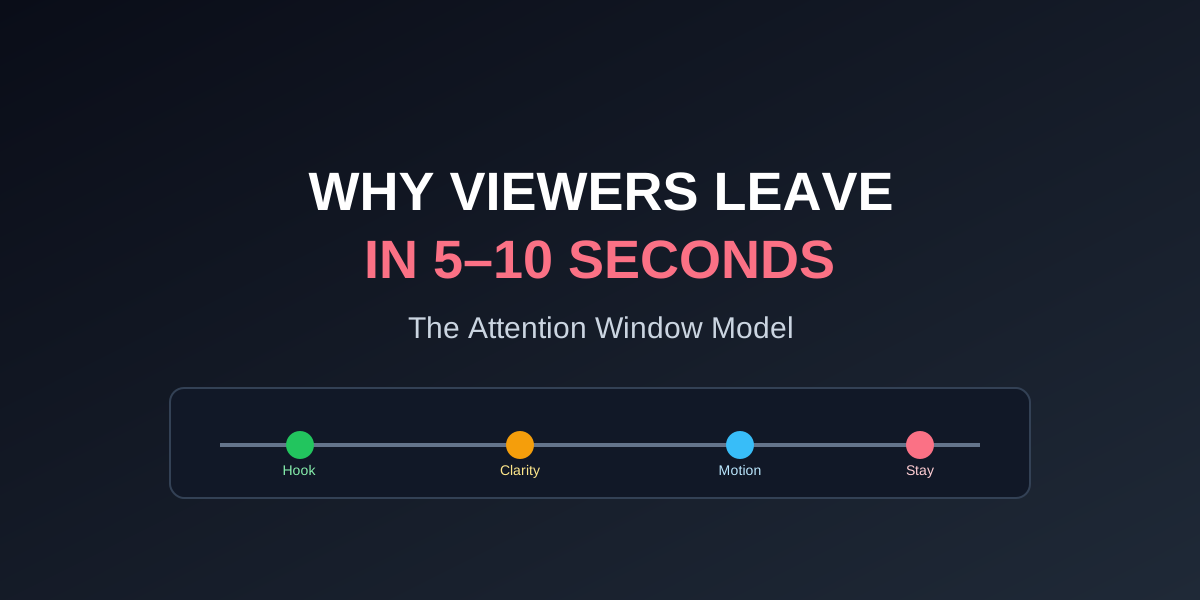
The first 10 seconds decide whether your stream gets explored or ignored.
Core Pain: “I get impressions but people bounce instantly.”
Search Intent: Understand why viewers leave in 5–10 seconds and how to fix first-window retention.
Key Conclusion: Early retention is a three-stage test: interrupt, clarify, and reduce friction.
The r/gamestreaming Pattern
In r/gamestreaming threads, the complaint is consistent:
“People click in, then vanish before I can even finish my sentence.”
This is not random. It is an attention-window failure in the first 10 seconds.
The Attention Window Model
Think of the first 10 seconds as a mini funnel with three gates.
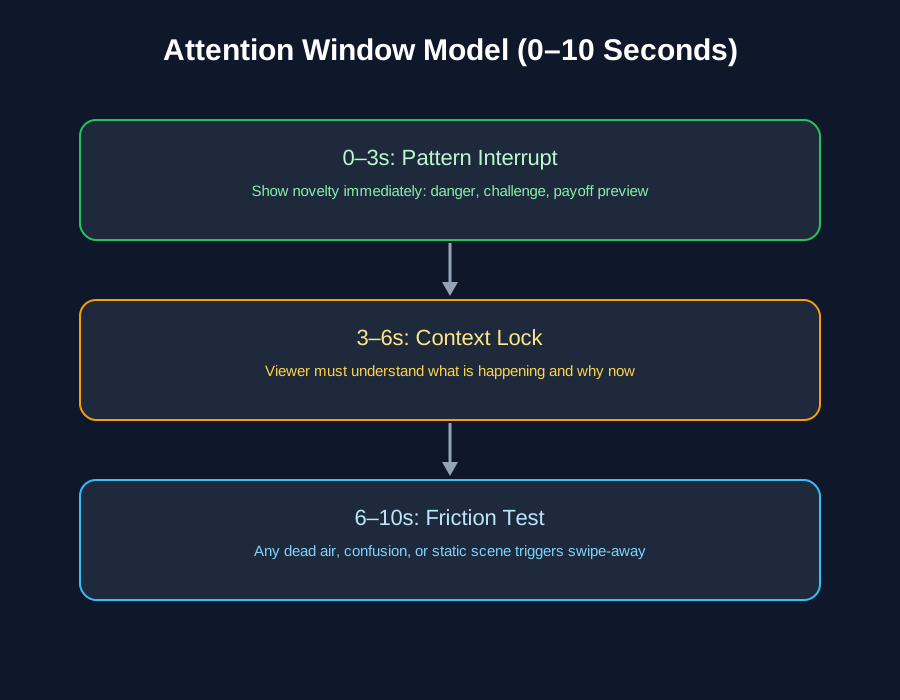
You do not lose viewers at one moment. You lose them at predictable gates.
Gate 1 (0–3s): Pattern Interrupt
The viewer asks, “Is this worth slowing down for?”
If your first seconds look like every other stream, they swipe.
High-survival signals:
- Immediate novelty or tension
- Clear visual change
- Fast voice entry
Gate 2 (3–6s): Context Lock
The viewer asks, “What exactly am I watching?”
If the context is unclear, they leave even if visuals are good.
High-survival signals:
- One-sentence objective
- On-screen cues matching title
- Clear who/what/why-now explanation
Gate 3 (6–10s): Friction Test
The viewer asks, “Is it easy to keep watching?”
Any friction here kills retention.
High-friction signals:
- Dead air
- Static scene
- Audio imbalance
- Delayed interaction loop
Structural Difference: Interest vs Friction
Many creators assume viewers leave because they are “not interested.” Often they leave because the stream is hard to parse quickly.
That means your first job is not entertainment depth. Your first job is low-friction orientation.
Before-and-After Opening Design
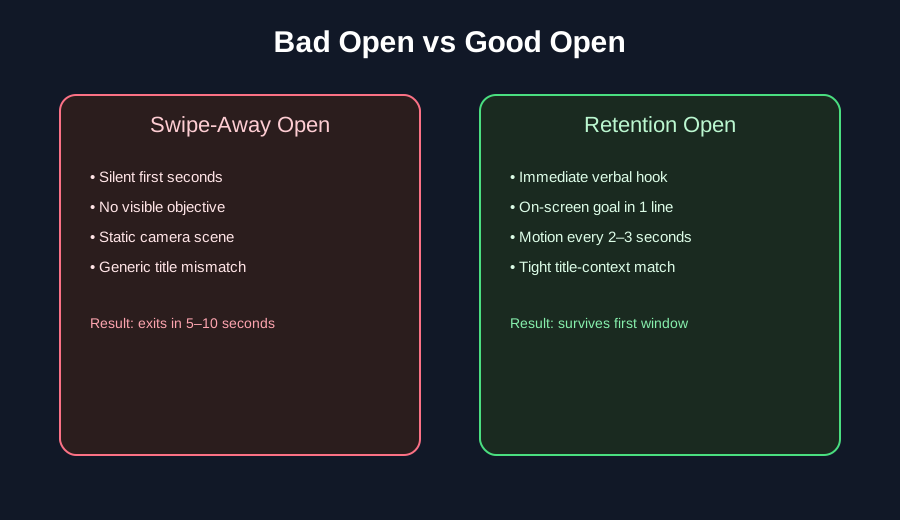
Keep your opening intentional: hook, context, then movement.
5-Step Opening Script Template
Use this in every stream opening:
- 0–2s: Say what is at stake right now.
- 2–4s: Show the active objective on screen.
- 4–6s: Explain the immediate next action.
- 6–8s: Trigger interaction with a binary prompt.
- 8–10s: Execute visible action without pause.
Quick Diagnostic Checklist
After each session, review first 30 seconds and mark:
- Did I speak in first 2 seconds?
- Did title match what viewers saw?
- Was there motion every 2–3 seconds?
- Did I avoid dead air entirely?
- Did I ask for interaction by second 8?
If three or more are “no,” your drop-off is structural, not luck.
FAQ
Do I need hype energy to pass 5–10 seconds?
No. You need clarity and momentum, not shouting.
Can game choice alone fix first-window retention?
No. Good games still fail if the opening is slow or confusing.
How often should I retest my opening?
Treat it like a thumbnail: iterate weekly using first-minute retention data.
Practical Conclusion
The first 10 seconds are not a warm-up. They are the real audition.
If you pass the attention window, you earn the chance to show your personality. If you fail it, the algorithm never gives your stream enough runway.