- Published on
How TikTok Live Testing Pools Actually Work: A Structural Framework (2026)
- Authors

- Name
- Robin
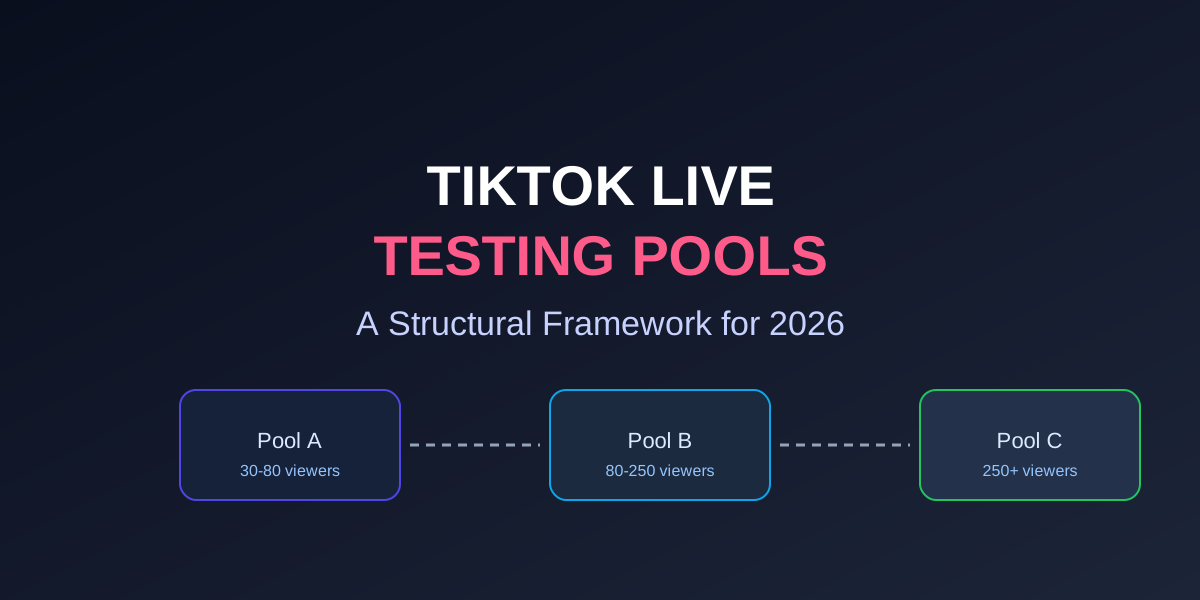
TikTok Live does not give you one linear push. It cycles your stream through testing pools and expands only when your signals stay strong.
Core Pain: “My Live spikes for 5 minutes, then dies. Is this random?”
Search Intent: Understand TikTok Live testing pools and what metrics move streams into bigger pools.
Key Conclusion: TikTok Live is a staged test system. You pass each stage with retention, interaction, and trust signals, not with stream length alone.
The r/streaming Pattern
In r/streaming, the same complaint keeps showing up in different words:
“I get a sudden burst of viewers, then it crashes hard. Next day it happens again. Is TikTok trolling me?”
This usually is not random. It is a pool test cycle.
The Structural Model: Pool A → Pool B → Pool C
TikTok Live appears to route traffic in rounds. Each round asks a different question.
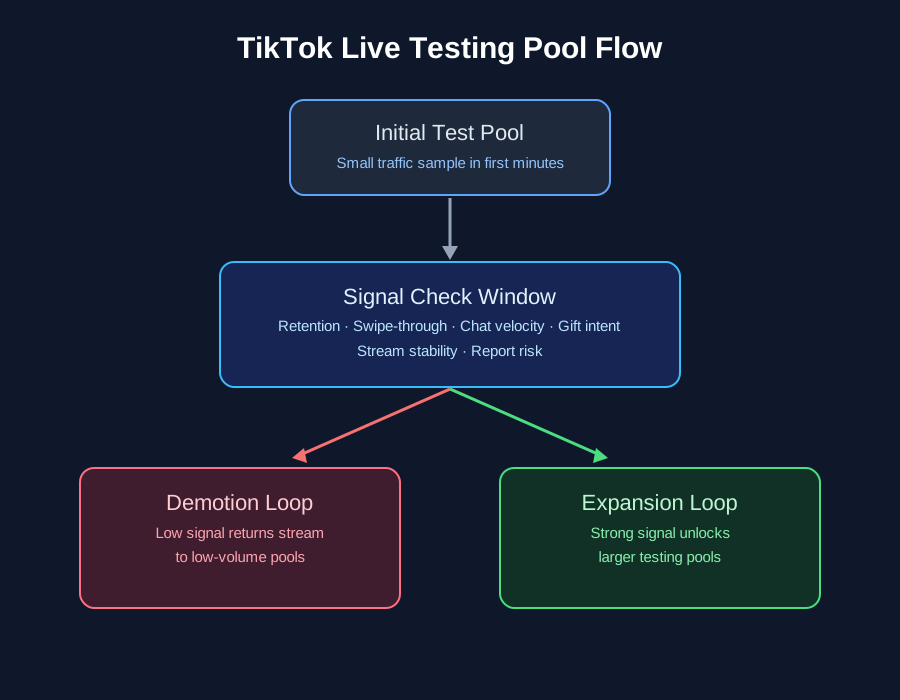
One weak window can trigger demotion. Multiple strong windows can unlock expansion.
Pool A: Initial Test
What TikTok asks: “Do people stop scrolling and stay for the first minute?”
Typical signals:
- 3–10 second hold rate
- first-minute retention
- title-to-content match
- immediate swipe-away rate
If this stage is weak, your stream gets minimal distribution no matter how long you stay live.
Pool B: Interaction Test
What TikTok asks: “Do viewers interact, or just idle?”
Typical signals:
- chat messages per minute
- repeated commenters
- interaction loops (polls, binary prompts, challenges)
- returning viewers within session
This is where many streams fail: content is watchable but not interactive.
Pool C: Trust + Depth Test
What TikTok asks: “Can this stream sustain healthy sessions at scale?”
Typical signals:
- session depth and median watch time
- technical stability (audio/video consistency)
- low friction and low report risk
- monetization intent without spam behavior
Strong Pool C behavior is what leads to larger, more durable pushes.
Why Streams Feel “Inconsistent”
Creators call it inconsistency, but structurally it is often stage mismatch:
- Great hook, weak interaction loop → pass Pool A, fail Pool B.
- Strong community, weak packaging → fail Pool A before your regulars even arrive.
- Good engagement, unstable stream quality → fail Pool C trust checks.
What To Fix First (By Pool)
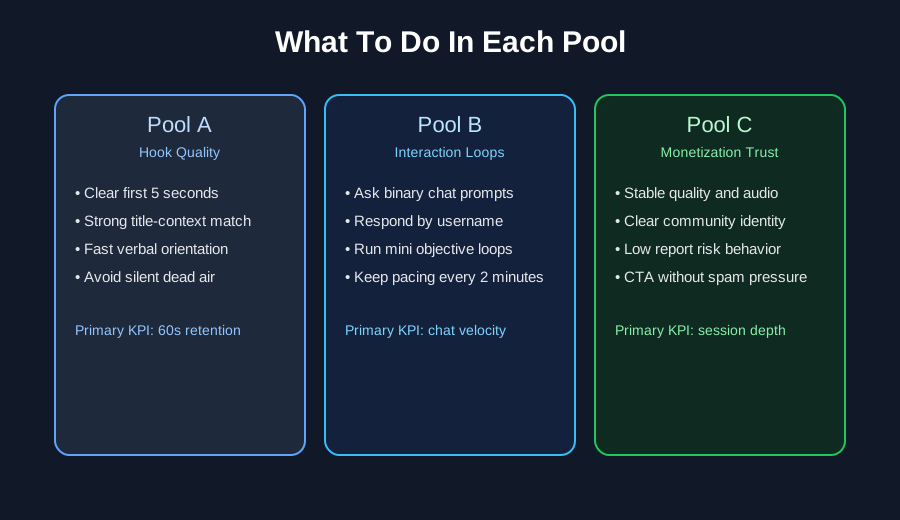
Treat each pool like a different exam. One strategy cannot solve all stages.
Practical order:
- Fix first-minute hook quality (Pool A).
- Add repeatable chat loops every 2 minutes (Pool B).
- Stabilize session quality and pacing consistency (Pool C).
A Simple 7-Stream Test Plan
- Run the same stream concept for 7 sessions.
- Change only one variable per session.
- Track three numbers: first-minute retention, chat velocity, median watch time.
- Label each session: A-fail, B-fail, or C-fail.
After one week, you usually get enough data to identify your bottleneck pool.
Practical Conclusion
TikTok Live testing pools are best treated as a structural framework, not an emotional mystery.
If you think in pools:
- dips become diagnostics,
- spikes become test windows,
- and growth becomes repeatable.
You do not need perfect streams. You need reliable pass rates at each stage.