- Published on
Why TikTok Live Feels Exhausting (And How to Stream Without Burning Out) (2026)
- Authors

- Name
- Robin
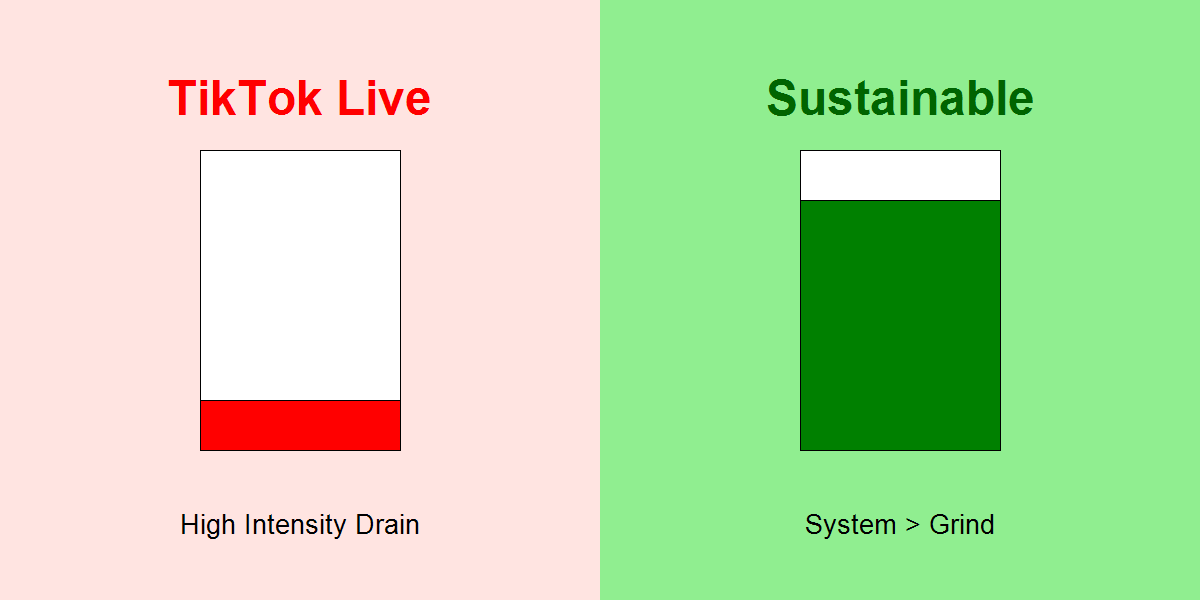
You can't sprint a marathon. Stop trying to keep 'TikTok Energy' for 4 hours.
Core Pain
After 2 hours on TikTok Live, you feel like you ran a 10k. You are drained, irritable, and dreading the next stream.
Search Intent
Why is TikTok Live so tiring? Streaming burnout symptoms. How to stream longer on TikTok without getting tired.
Key Conclusion
TikTok requires 100% intensity because viewers swipe away in 3 seconds. You cannot sustain this for long streams. The fix is to shorten streams or build "Low Energy" content formats.
- The Energy Leak Loop
- Sprint vs. Marathon: The Intensity Mismatch
- How to Fix the Drain
- Actionable Checklist
- FAQ
- Practical Conclusion
Introduction
In r/smallstreamers, a user asked: "I can stream 6 hours on Twitch fine. But 1 hour on TikTok wipes me out. Am I weak?"
You aren't weak. You are just driving a drag racer like it's a minivan.
Twitch is "Lean Back" content. You can chill, look at chat, and play. TikTok is "Lean Forward" content. You have to fight for attention every single second. The algorithm punishes silence. This constant "fight or flight" mode is what kills your battery.
The Energy Leak Loop
Here is what happens biologically during a TikTok stream.
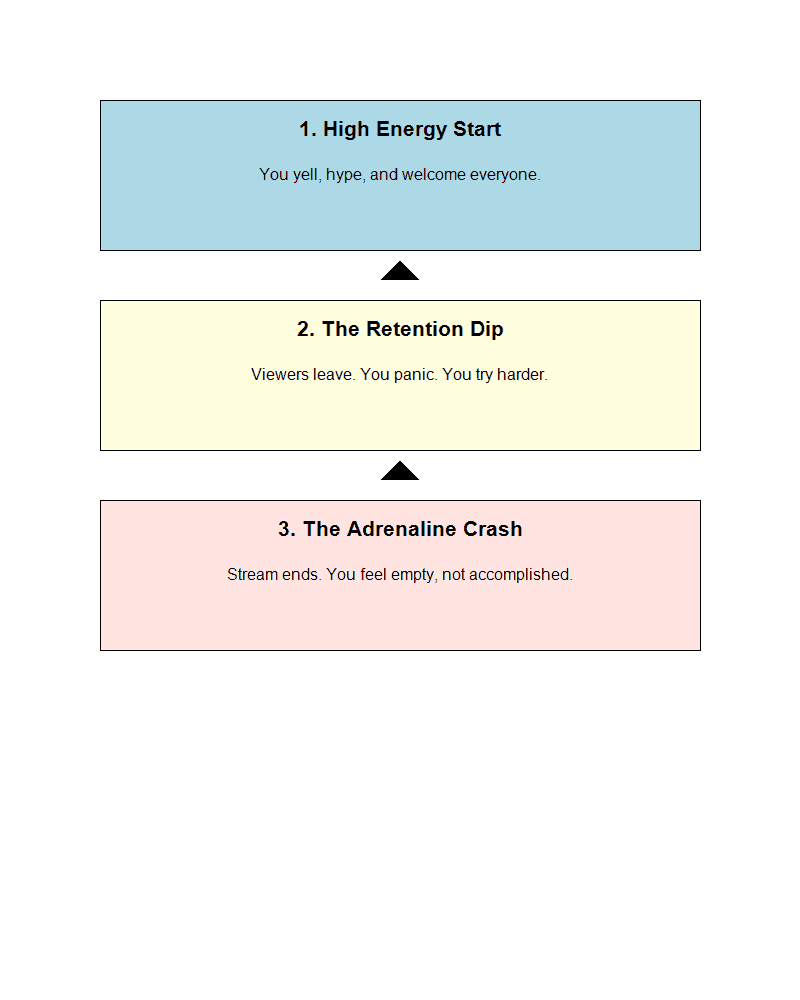
The Cycle: Hype → Dip → Panic → Crash. This rollercoaster burns more cortisol than a workout.
1. The Hype (0-30 mins)
You start strong. You greet every user. Your energy is 11/10.
- Cost: High adrenaline usage.
2. The Retention Dip (30-60 mins)
The algorithm cycles your audience. Viewers drop from 500 to 50.
- Reaction: You panic. You think "I'm boring," so you ramp up energy even more to compensate.
- Cost: Cortisol spike (Stress).
3. The Crash (Post-Stream)
You end the stream. The adrenaline cuts off. You crash hard.
- Result: You associate streaming with pain. You procrastinate the next one.
Sprint vs. Marathon: The Intensity Mismatch
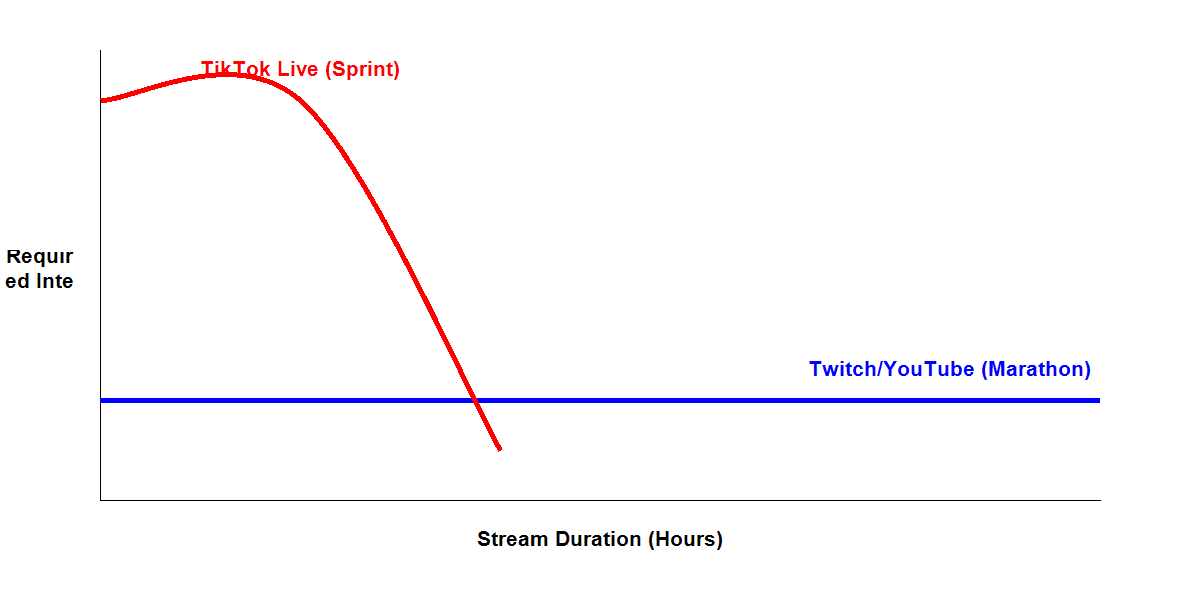
Twitch allows for low-intensity valleys. TikTok demands a flat line of high intensity. You cannot maintain that red line for 4 hours.
The Rule: Intensity x Duration = Constant.
- If Intensity is High (TikTok), Duration must be Low.
- If Duration is High (Twitch), Intensity must be Low.
You are trying to do High Intensity + High Duration. That is physically impossible.
How to Fix the Drain
1. The "90-Minute Cap"
Stop doing 4-hour TikTok streams.
- The algorithm usually boosts you for 60-90 minutes. After that, you are fighting diminishing returns.
- Strategy: Stream for 90 minutes with 10/10 energy, then stop. Rest.
2. The "Low Energy" Format
Design content that doesn't require you to scream.
- High Energy: "Reacting to crazy clips!" (Requires you to perform).
- Low Energy: "ASMR Keyboard cleaning" or "Study with me." (Requires you to just exist).
- Pivot: If you are a gamer, switch to "Chill ranked grind" instead of "Hype commentary."
3. Visual Context > Verbal Context
Stop repeating yourself.
- Instead of saying "We are playing Elden Ring no-hit run" every 10 seconds, put a huge text overlay on the screen.
- This offloads the "context work" from your voice to the screen.
Actionable Checklist
- Set a Timer: Hard stop at 90 minutes.
- Use Overlays: Let the text explain the stream so you don't have to.
- Hide the View Count: The panic of seeing the number drop burns more energy than the streaming itself.
- Schedule Breaks: If you must stream long, take a "BRB" screen break every hour. TikTok retention will tank, but your sanity will survive.
FAQ
Q: Will short streams hurt my growth? A: No. Frequency matters more than duration on TikTok. Two 1-hour streams are better than one 4-hour stream where you look dead for the last 3 hours.
Q: How do big streamers do it? A: They build "Low Energy" personas. Or they have mods handling the chat so they can just play. Or they are burnt out and hiding it.
Q: Should I just quit TikTok? A: No. Just treat it as a sprint. Do your sprint, then go to Twitch/YouTube for the cooldown marathon.
Practical Conclusion
You are not a machine. You are a creator. If TikTok Live feels exhausting, it's because you are fighting the format. Embrace the sprint. Go hard for an hour, then get out. Your audience would rather have 60 minutes of you at your best than 4 hours of you watching the clock.